The Château
Montbéliard-Württemberg
Site
Montbéliard-Württemberg
Site
The emblem of the town, the Château Montbéliard-Württemberg was one of the residences of the German Dukes of Württemberg from the 15th century until the French Revolution.
Listed as a historical monument, it is currently undergoing a vast conversion project to turn it into a major tourist and cultural attraction, a place to live and meet around the arts and culture.
Listed as a historical monument, it is currently undergoing a vast conversion project to turn it into a major tourist and cultural attraction, a place to live and meet around the arts and culture.
THE ESPLANADE
THE CHÂTEAU
THE MUSEUM OF
THE CHATEAU OF
THE DUKES OF WÜRTTEMBERG
THE CHATEAU OF
THE DUKES OF WÜRTTEMBERG
THE MUSEUM OF ART
AND HISTORY,
HOTEL BEURNIER-ROSSEL
AND HISTORY,
HOTEL BEURNIER-ROSSEL
LE CHÂTEL-DEVANT (Front Castle)
THE MUNICIPAL
ARCHIVES
ARCHIVES
THE GENTLEMEN'S
LODGE
LODGE
THE CHANCELLERY
THE ESPLANADE
THE CHÂTEAU
THE MUSEUM OF THE CHATEAU OF THE DUKES OF WÜRTTEMBERG
THE MUSEUM OF ART AND HISTORY, HOTEL BEURNIER-ROSSEL
LE CHÂTEL-DEVANT (Front Castle)
THE MUNICIPAL ARCHIVES
THE GENTLEMEN'S LODGE
THE CHANCELLERY
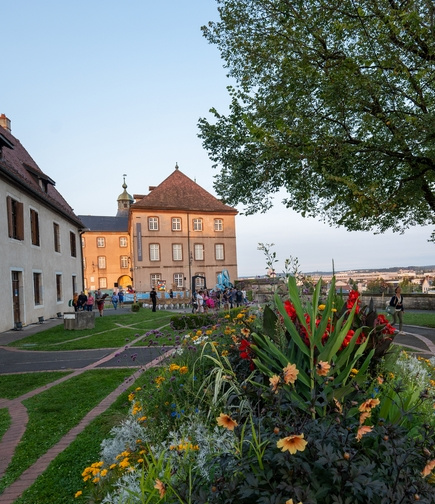
THE ESPLANADE
A fortified settlement was established as early as the 10th century on this steep site, strategic in case of attack. At the time, it included a castle, a church, a cemetery and a few homes. Over the centuries, constructions multiplied under the impetus of the Counts of Montbéliard: the Châtel-devant (front castle), the Châtel-derrière (rear castle), the church, its cloister and cemetery, the gentlemen's lodge, the arsenal, the chancellery and the gardens occupied almost the entire area. The destruction of the church in 1810 freed up the space, which was transformed into a public square. Today, this esplanade overlooking the town hosts open-air exhibitions and events such as "Château en scène". New developments are planned to accommodate large-scale events and make this space a place to live and stroll for the people of Montbéliard and the surrounding area.
©Periplesetcie, Simon Daval
©Periplesetcie, Simon Daval
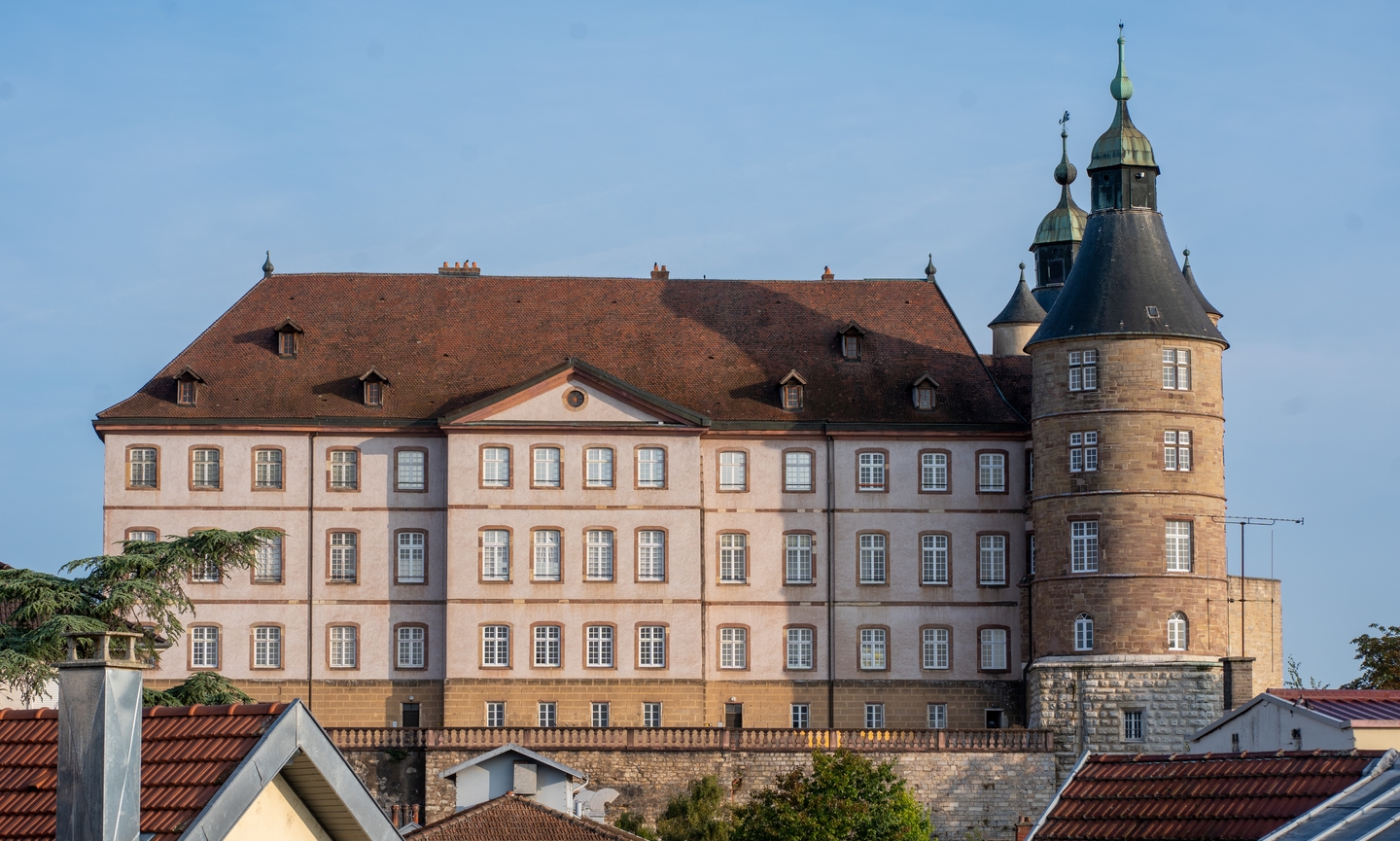
The Château
The image of the Château with its two emblematic round towers is a modern vision that obscures a complex and forgotten historical reality. Since the 13th century, the fortified site has included numerous buildings. The Counts of Montbéliard established their apartments there, constantly modernizing this formidable fortress, until the construction of the iconic Henriette Tower (1424) and Frederick Tower (1595) during the reign of the Württembergs. The central building of the Château of the Dukes of Württemberg was rebuilt in the mid-18th century. Today, it houses a fascinating museum retracing the history of the town and the fort.
© Periplesetcie, Simon Daval
© Periplesetcie, Simon Daval
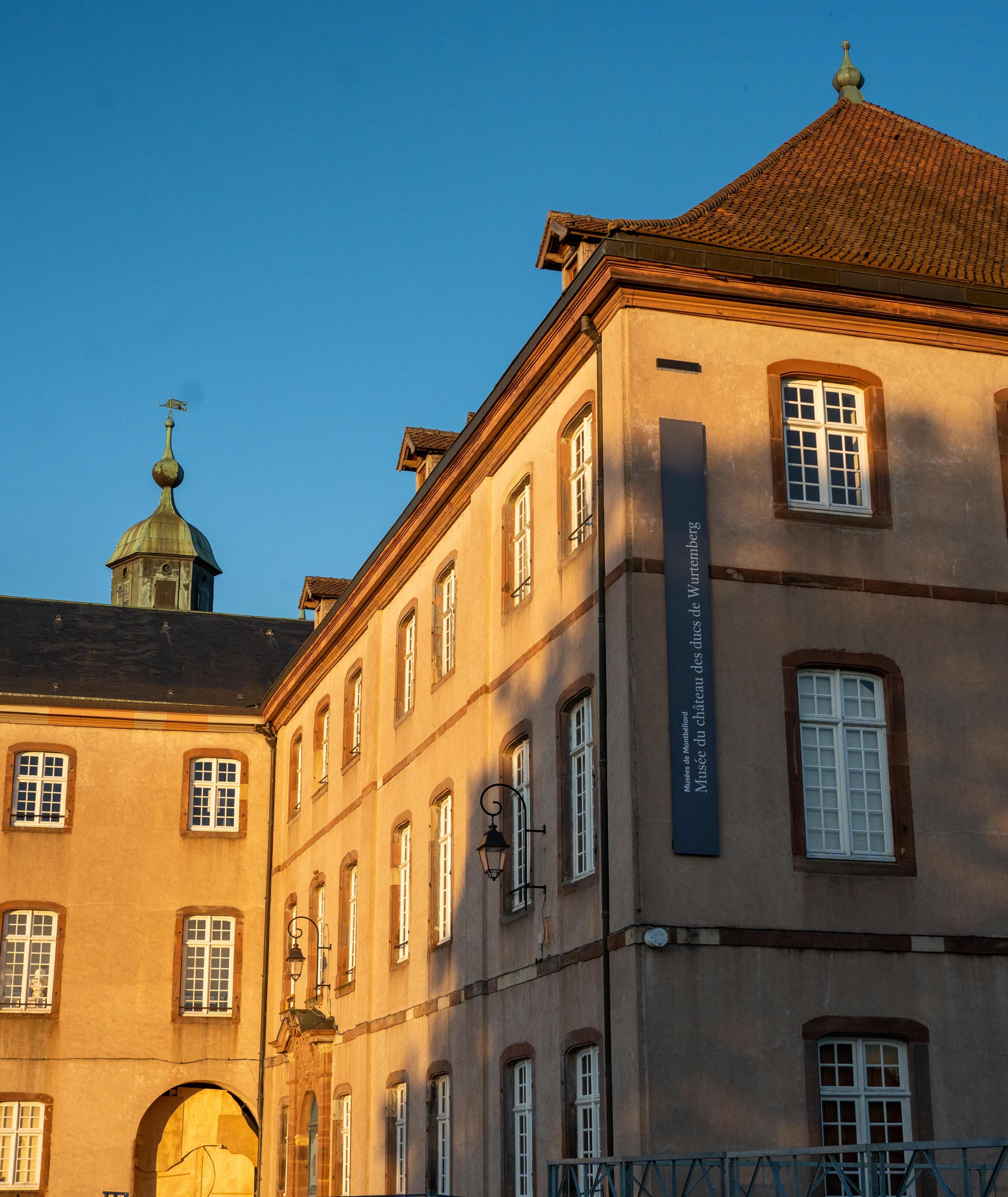
THE MUSEUM OF
THE CHATEAU OF THE DUKES OF WÜRTTEMBERG
THE CHATEAU OF THE DUKES OF WÜRTTEMBERG
From snake eggs, the first specimens donated in 1850, to contemporary works acquired in recent years, the Château Museum has a rich collection of more than 500,000 objects, some modest, some remarkable, and some unusual.
This incomparable collection illustrates fields as diverse as archaeology, natural sciences, ethnology, fine arts, and contemporary art. It depicts and tells the story of the region through time and space, from 300 million years ago to the present day.
After more than a year of closure, the museum partially reopened its doors on December 21st 2024, with the new historical tour, the first step in an ambitious transformation.
© Periplesetcie, Simon Daval
This incomparable collection illustrates fields as diverse as archaeology, natural sciences, ethnology, fine arts, and contemporary art. It depicts and tells the story of the region through time and space, from 300 million years ago to the present day.
After more than a year of closure, the museum partially reopened its doors on December 21st 2024, with the new historical tour, the first step in an ambitious transformation.
© Periplesetcie, Simon Daval
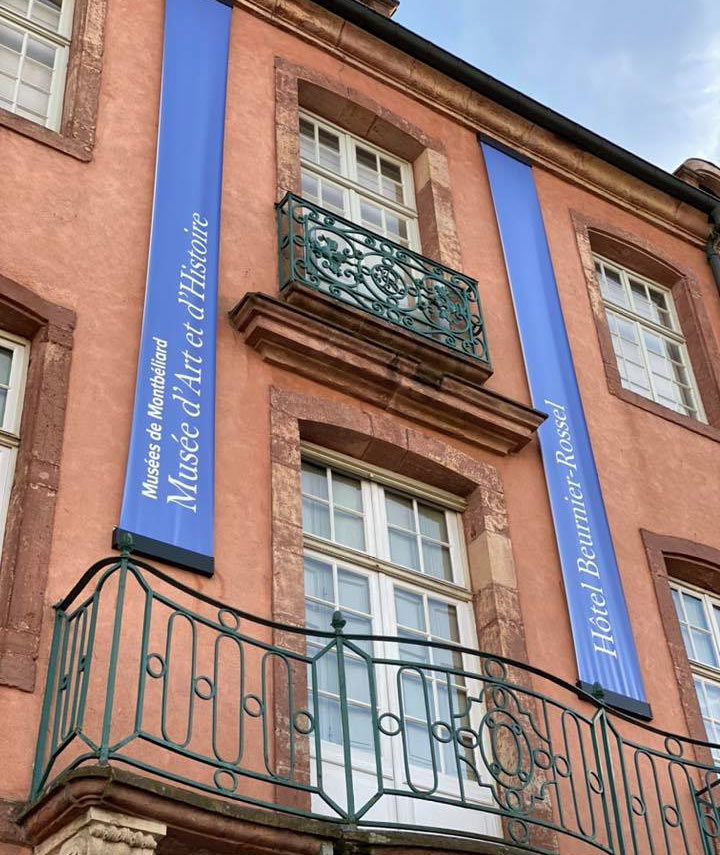
THE MUSEUM OF ART
AND HISTORY,
HOTEL BEURNIER-ROSSEL
AND HISTORY,
HOTEL BEURNIER-ROSSEL
In the heart of the town, the Hôtel Beurnier-Rossel houses the Museum of Art and History, presenting the traditions and customs of the Montbéliard region, a land of Lutheran influence since the 16th century. This elegant building, bequeathed by Doctor Louis Beurnier (1917), includes an 18th-century bourgeois interior with its furniture, everyday objects, and portraits of notable figures. You will discover local cultural treasures such as traditional headwear and fabrics, as well as popular imagery. Artistic and technical expertise is also showcased, with clocks and music boxes from the local luxury clockmaker L’Épée.
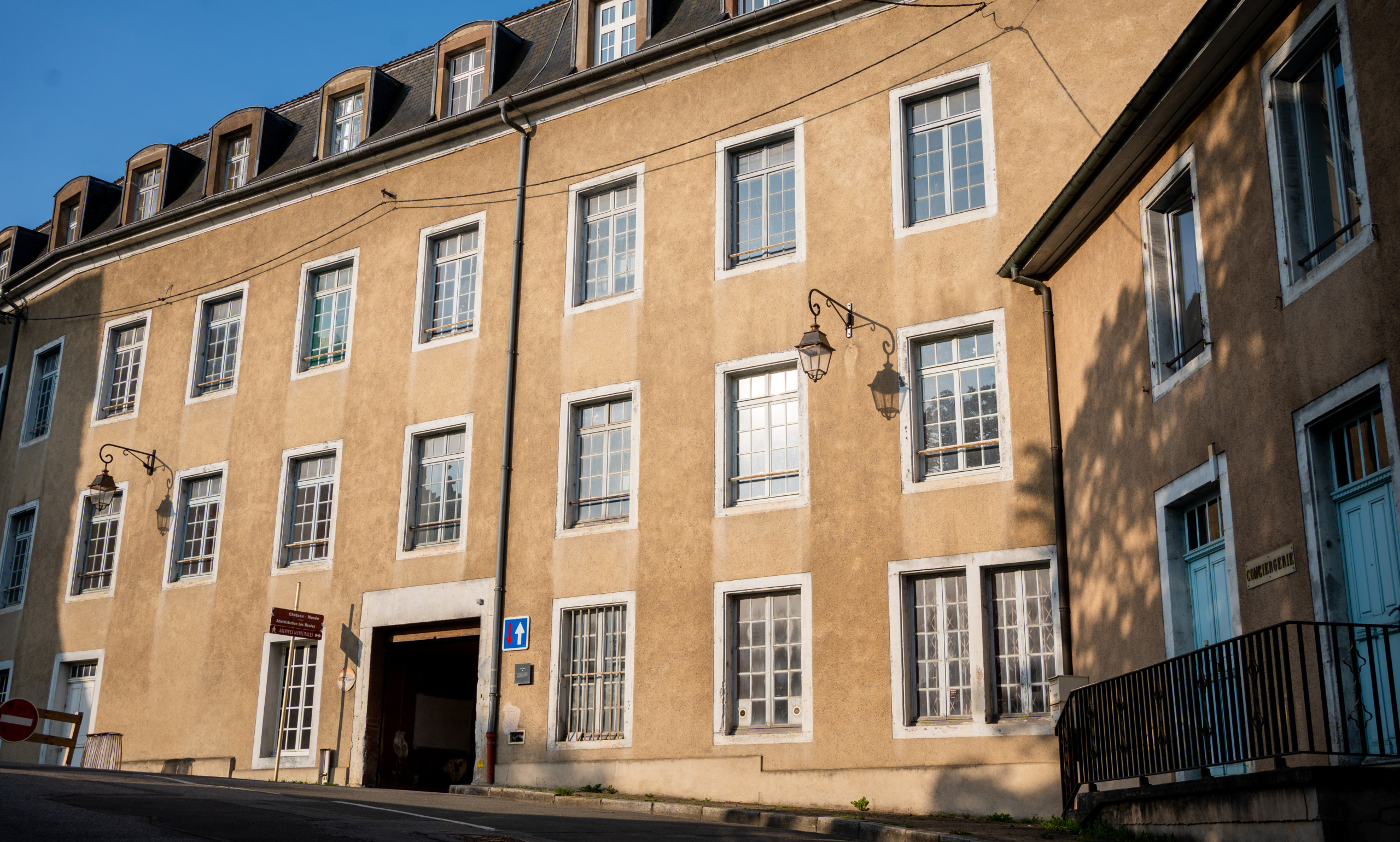
LE CHÂTEL-DEVANT (Front Castle)
To the west of the castle site, the Châtel-devant (front castle) stands on the probable site of the first fortress, mentioned in the 10th century. Until the Revolution, the site was the living quarters of the court servants. It also housed the stables, falconry, forges, and kennels. Few original features remain today. The dilapidated buildings were rebuilt in the 19th century, to serve as a shelter for the poor, then as barracks, before housing the first Customs School in 1938 and later still the administrative departments of the Conservatoire du Pays de Montbéliard (Montbéliard Music Conservatory). Today, they house the municipal archives and the museum administration.
© Periplesetcie, Simon Daval
© Periplesetcie, Simon Daval
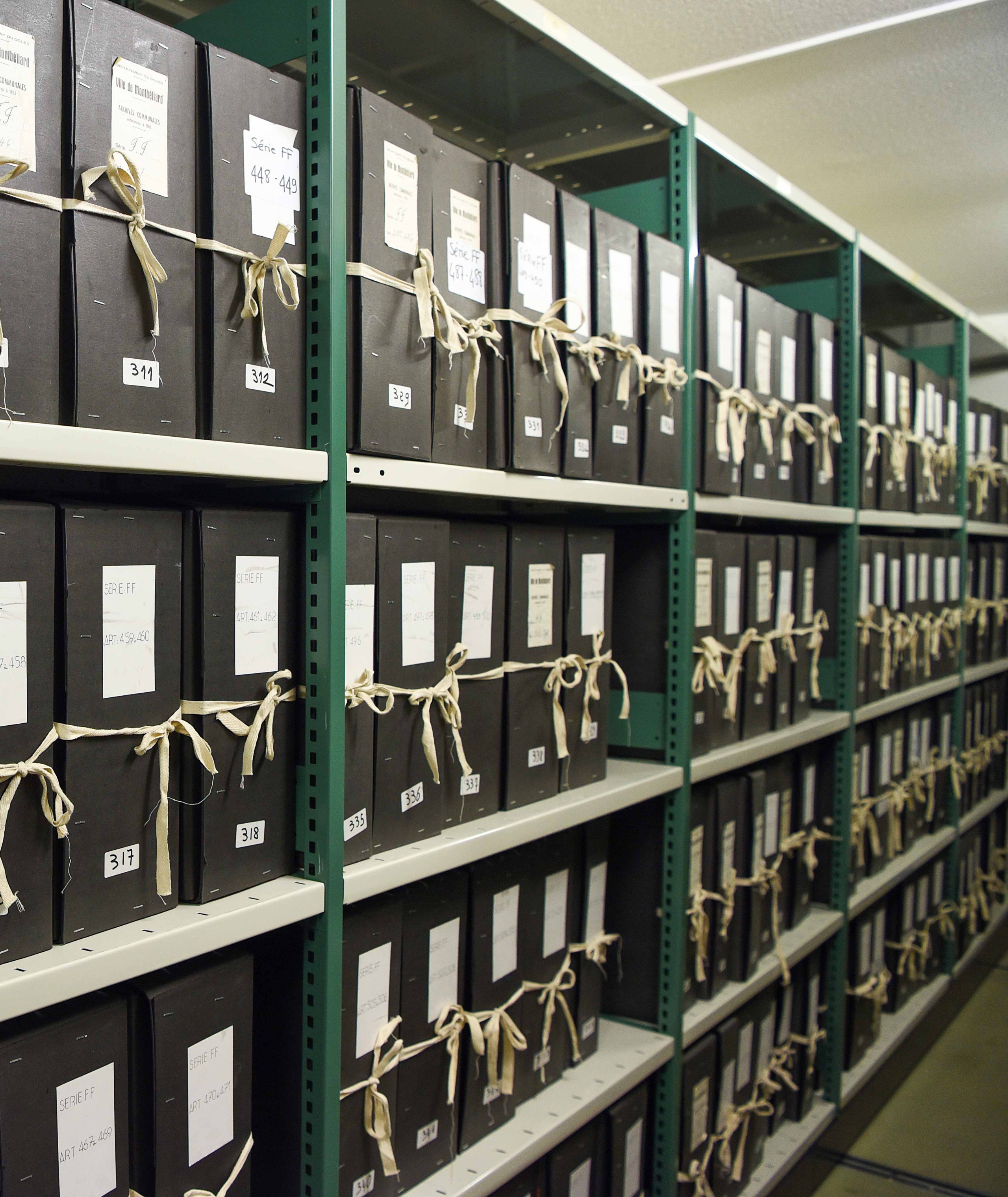
The Municipal
Archives
Archives
Located in the Châtel-devant (front castle) since 1999, the Municipal Archives play a crucial role in the conservation and promotion of the town's heritage and that of the Château Montbéliard-Württemberg.
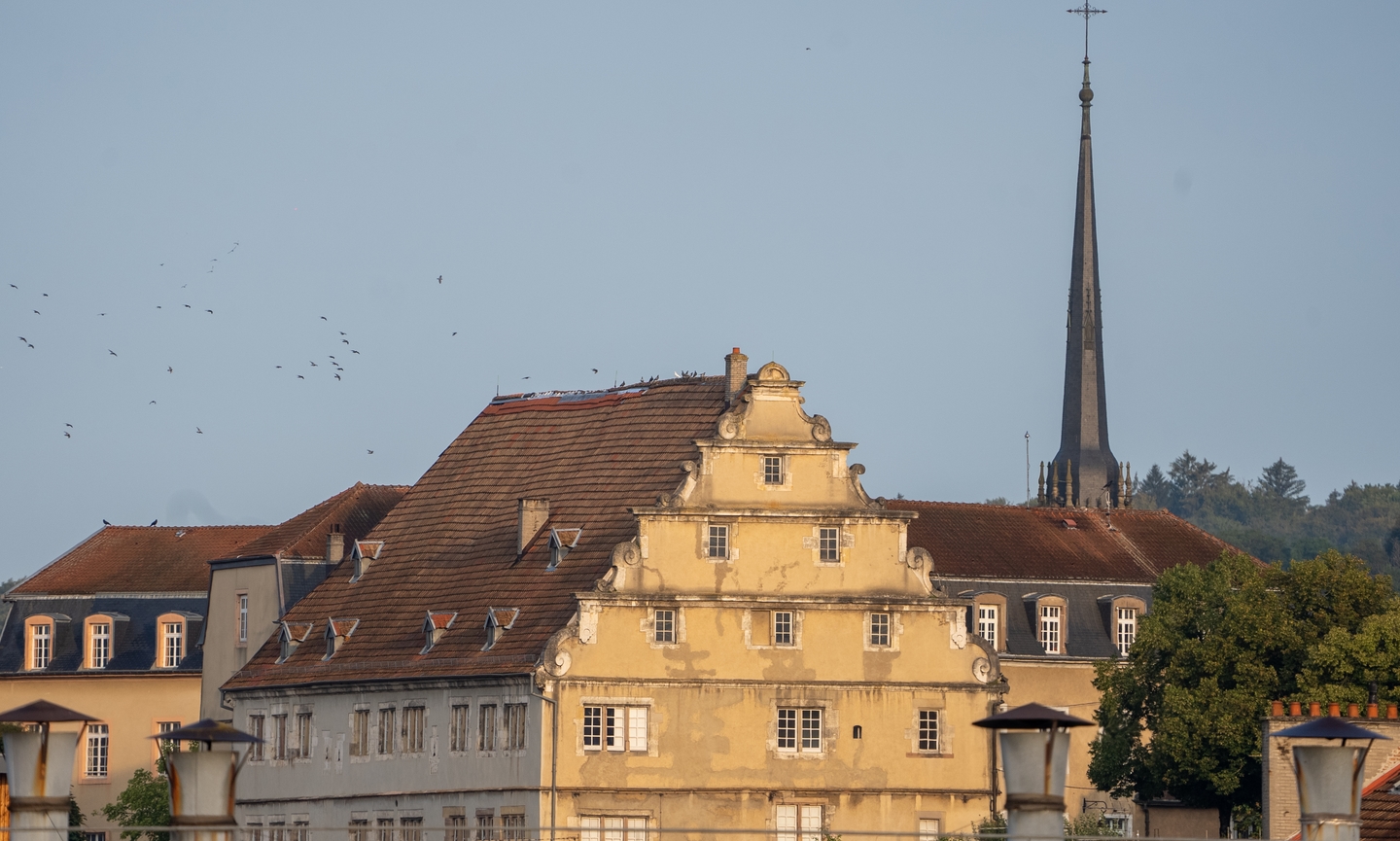
The Gentlemen's Lodge
The Gentlemen's Lodge is the work of Heinrich Schickhardt, architect to Duke Frederick I of Württemberg. This building, constructed between 1595 and 1599, served as a residence for the bailiff, the Duke's right-hand man, and the courtiers. In the 19th century, it was occupied by the military, who installed the clock on the façade, which earned it a new name.
This exceptional building, typical of the Swabian Renaissance, was the headquarters of the Montbéliard Music Conservatory from 1970 to 2023. It is due for restoration in the near future.
© Periplesetcie, Simon Daval
This exceptional building, typical of the Swabian Renaissance, was the headquarters of the Montbéliard Music Conservatory from 1970 to 2023. It is due for restoration in the near future.
© Periplesetcie, Simon Daval

The Chancellery
Located near the Château gate, the old Chancellery was demolished in the 19th century. The current building dates from 1813. It was originally built as a church. At the end of the 19th century, it was modified by the military administration. The windows were reduced in size and a floor was added. An annex of the Montbéliard Music Conservatory for several decades, this building is also part of the project to redevelop the Château site.
© Periplesetcie, Simon Daval
© Periplesetcie, Simon Daval

The Château Site
Redevelopment
Project
Redevelopment
Project
Launched in early 2024, the redevelopment of the Château de Montbéliard-Württemberg aims to make the site the driving force behind tourism and culture in the City of Princes. This ambitious project is organized around three themes: history, heritage, and urban planning. It will take around ten years to complete.

DISCOVER
THE HISTORY OF
THE CHATEAU
THE HISTORY OF
THE CHATEAU
A thousand-year-old site, the Château Montbéliard-Württemberg is built on a rocky spur overlooking the town.
This defensive fortress, erected in the 10th century, became the home of the Counts of Montbéliard, then the residence of the Dukes of Württemberg for four centuries (1397-1793).
This defensive fortress, erected in the 10th century, became the home of the Counts of Montbéliard, then the residence of the Dukes of Württemberg for four centuries (1397-1793).